





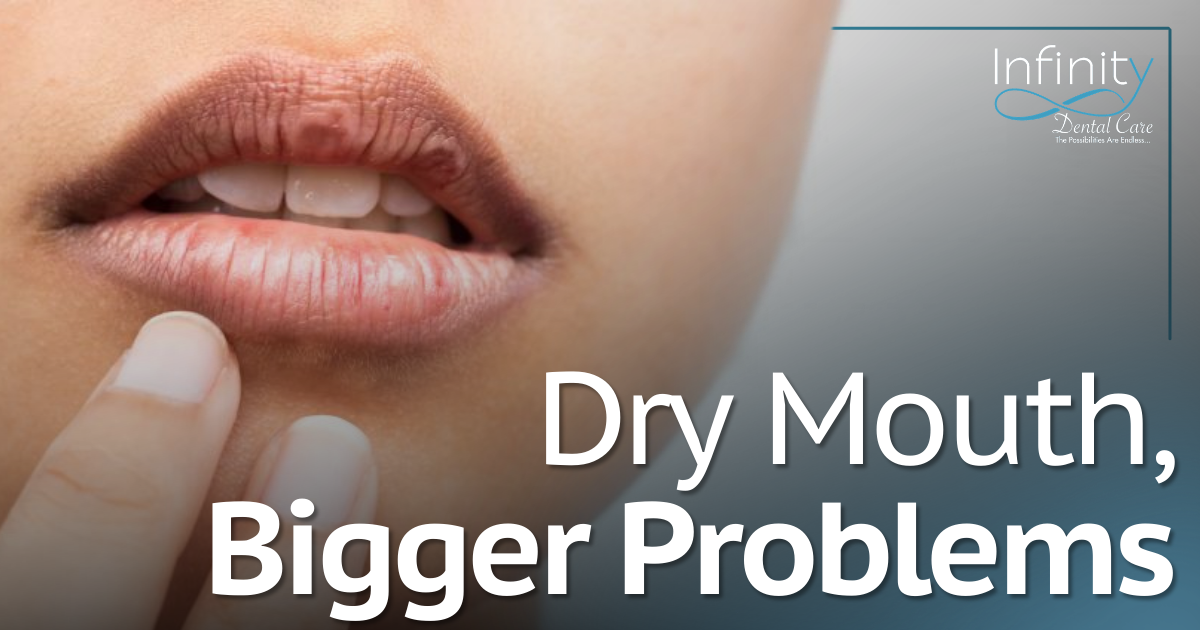
Dry Mouth Matters More Than You Think
Dry mouth may seem like a minor inconvenience, but it can significantly affect oral health if left unaddressed. Many people notice it as a sticky feeling, frequent thirst, or trouble swallowing, especially at night or first thing in the morning. Because it often develops gradually, it is easy to adapt to the discomfort and move on. In reality, dry mouth is often a sign that your mouth is missing one of its most important protective tools: saliva. Read on to learn more.
What Dry Mouth Actually Is
Dry mouth, also known as xerostomia, occurs when the salivary glands do not produce enough saliva to keep the mouth comfortable and balanced. Saliva does much more than keep the mouth moist. It helps neutralize acids, wash away food particles, and control bacteria levels.
When saliva flow is reduced, the mouth becomes more vulnerable. Acids linger longer, bacteria multiply more easily, and enamel faces greater stress. Over time, this imbalance can affect teeth, gums, and overall comfort.
Common Causes of Dry Mouth
Dry mouth is not an isolated condition in most cases. It’s usually the result of another factor affecting saliva production. Some of the most common causes include:
- Side effects of medications such as antihistamines, antidepressants, or blood pressure drugs
- Dehydration or low daily water intake
- Mouth breathing, especially during sleep
- Stress or anxiety
- Certain medical conditions that affect the salivary glands
Because multiple factors can overlap, dry mouth often has multiple causes.
How Dry Mouth Affects Oral Health
Saliva acts as a natural defense system for your teeth and gums. When it’s reduced, cavities can develop more easily, especially along the gumline and between teeth. Gum tissue may become irritated, and small sores can take longer to heal.
Patients with dry mouth are also more likely to experience bad breath. Without enough saliva to flush bacteria away, odor-causing compounds build up quickly. These changes often occur even when brushing and flossing habits remain consistent.
Signs Patients Often Overlook
Dry mouth is not always limited to a dry feeling. Many patients notice changes that feel unrelated at first. These signs can include a burning sensation on the tongue, difficulty swallowing dry foods, altered taste, or lips that crack easily. Because these symptoms can come and go, they are often dismissed. Mentioning them during dental visits helps us connect the dots and offer guidance early.
How We Help Manage Dry Mouth
Dental care for dry mouth focuses on reducing risk and improving comfort. We evaluate oral tissues, cavity patterns, and saliva flow to understand how dryness is affecting the mouth. From there, recommendations are tailored to each patient. Management may include fluoride support to strengthen enamel, guidance on hydration habits, and suggestions for saliva-supporting products. In some cases, adjusting oral care routines helps protect teeth more effectively between visits.
Everyday Habits That Support Saliva Flow
Small daily changes often make a noticeable difference for dry mouth. Drinking water regularly throughout the day supports moisture levels and comfort. Avoiding frequent sugary or acidic drinks reduces stress on enamel. Using alcohol-free oral care products can also help, as alcohol can worsen dryness.
Why Dry Mouth Should Not Be Ignored
Dry mouth is more than a comfort issue. Over time, it increases the risk of cavities, gum problems, and infections. Addressing it early supports healthier outcomes and helps prevent avoidable dental treatment.
If dryness persists or worsens, it is worth discussing with us. Identifying the cause allows for more effective management and better protection for your smile. Schedule your next checkup at our office located in Walnut Grove, CA, and we can map the way forward.